Union Pacific and Norfolk Southern Merger: What It Means for Grain Logistics
Navigating the proposed Union Pacific and Norfolk Southern transcontinental railroad merger requires understanding how fewer handoffs could drastically alter grain transportation costs, rail shipping efficiency, and long-term agricultural freight negotiations for American farmers and grain elevator operators shipping cross-country.
Key Takeaways
- The proposed Union Pacific and Norfolk Southern merger aims to create America's first true coast-to-coast transcontinental railroad system.
- Agricultural shippers rely heavily on rail to move corn, soybeans, wheat, and fertilizer efficiently across national supply chains.
- Single-line haul routes could reduce interchange handoffs, potentially decreasing transit times between midwestern elevators and coastal ports.
- Agricultural groups and grain shippers remain concerned that diminished rail competition could reduce their pricing leverage.
- The Surface Transportation Board continues its rigorous review process while monitoring potential impacts on agricultural freight rates.
When the agricultural supply chain relies on steel rails to move hundreds of millions of bushels of grain from the heartland to domestic processors and export terminals, any structural shift in the rail industry demands close attention. The prospect of a combined Union Pacific and Norfolk Southern network introduces a massive variable into modern grain logistics. For decades, moving bulk commodities like corn and soybeans across multiple railroad lines meant navigating complex interchange points, varying equipment availability, and multiple freight contracts. A single transcontinental operator changes that dynamic completely.
The Promise of Single-Line Hauls for Agriculture
Proponents of mega-mergers in the freight rail sector consistently point to one primary advantage: the elimination of operational friction. When a unit train of wheat or soybeans travels from an origination elevator in the Midwest to a destination terminal without being handed off between competing Class I railroads, several bottlenecks disappear.
Interchange delays are notorious for slowing down agricultural supply chains, especially during peak harvest windows when car velocity dictates overall market liquidity. A unified system could theoretically streamline asset utilization, ensuring that grain hopper cars spend more time moving loaded between terminals and less time sitting in interchange yards waiting for switch crews. For grain merchandising desks and cooperative managers, predictable transit times translate directly into reduced carrying costs and better risk management when locking in basis values and export commitments.
Equipment Efficiency and Car Availability
Beyond transit speed, private and railroad-owned fleet management stands to benefit from unified network visibility. Coordinated scheduling across a transcontinental footprint makes it easier to position empty hopper cars where they are actually needed rather than waiting for interline equipment swaps. When harvest pressure spikes regional demand, fluid asset routing can prevent local car shortages from turning into regional supply chain crises.
The Freight Competition Concerns for Grain Shippers
Despite the operational efficiencies touted by corporate leadership, agricultural stakeholders and grain shippers view massive rail consolidation with a healthy dose of skepticism. The fundamental economic concern is straightforward: reduced competition often leads to pricing power dominance by the carrier.
Many rural grain elevators are "captive shippers," meaning they have physical access to only one Class I railroad. When multiple rail networks operate regionally, shippers retain some leverage through routing options or competitive gateway access. As Class I railroads consolidate further, the pool of competing networks shrinks, potentially leaving rural elevators with fewer options to negotiate competitive freight rates. Given that transportation costs represent a significant percentage of landed grain value, even small rate adjustments can heavily impact farm-gate prices.
Regulatory Oversight and STB Scrutiny
The Surface Transportation Board (STB) acts as the primary regulatory watchdog guarding against anti-competitive behavior and service failures in freight rail. Following historical precedents where previous mergers created severe regional gridlock and service deterioration—most notably the Union Pacific and Southern Pacific merger in the late 1990s—the STB applies intense scrutiny to modern proposals. Agricultural advocacy groups consistently pressure federal regulators to demand strict service metrics, enforceable interchange commitments, and robust protections for captive grain shippers before allowing any sweeping consolidation to proceed.
Navigating the Future of Ag Freight
For independent farmers, elevator operators, and agricultural truckers, the ongoing debate over transcontinental rail mergers is more than corporate finance news; it directly impacts how smoothly the agricultural economy functions. While growing a record crop is a monumental achievement, successfully clearing the supply chain hurdle determines whether that harvest yields a profit. As regulatory reviews progress, grain marketers must stay informed about changing freight dynamics and maintain diversified transportation strategies to protect their bottom lines.
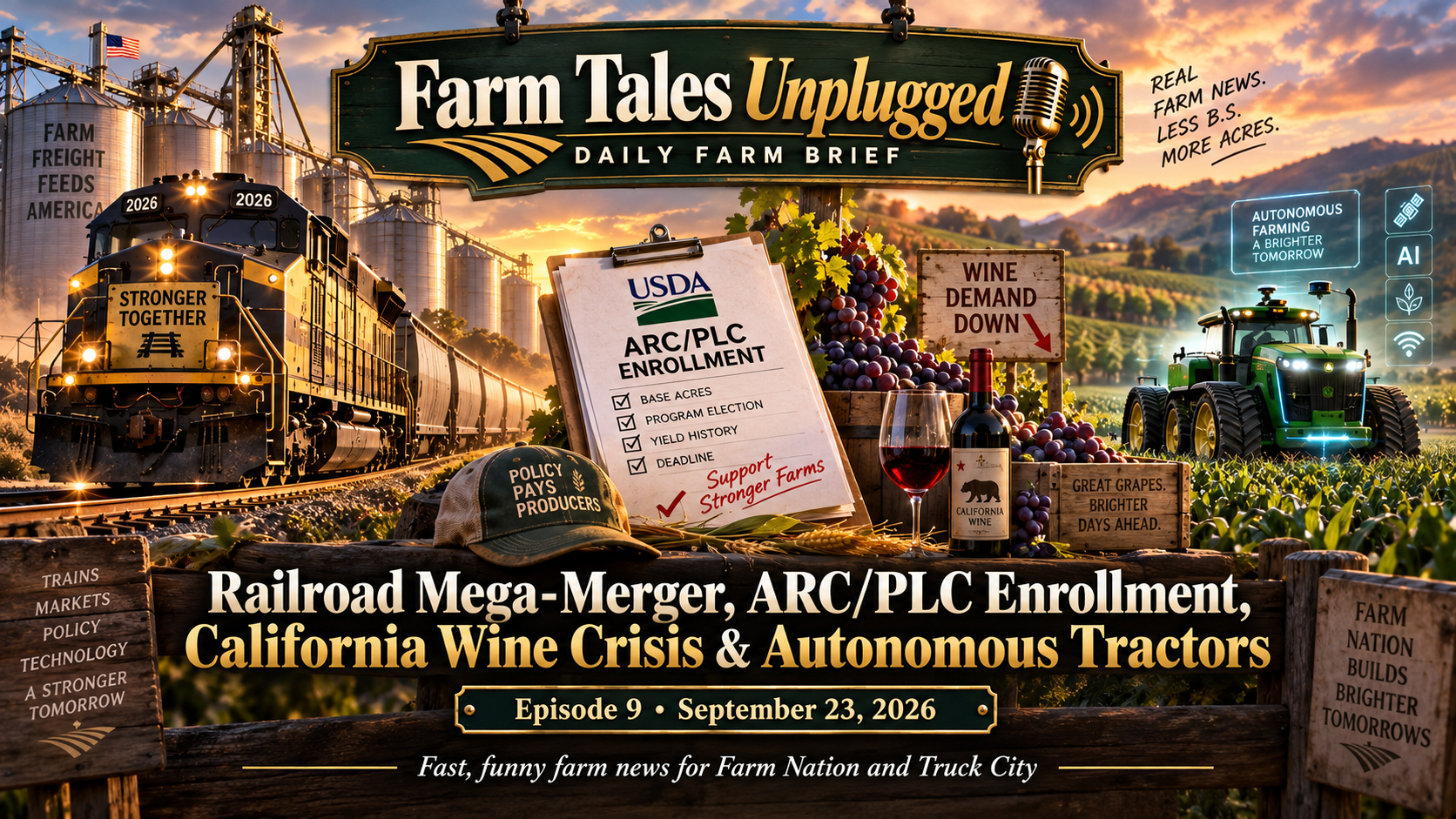
To hear more about this railroad merger alongside updates on USDA ARC/PLC enrollment, California wine-market pressures, and autonomous farming technology, listen to the complete discussion on the podcast: Listen to the full episode.
Frequently Asked Questions
How would a Union Pacific and Norfolk Southern merger affect grain farmers?
A transcontinental merger could improve transit speeds and reduce interchange delays for grain moving coast-to-coast, but it also raises concerns among agricultural shippers about reduced rail competition and potential pricing leverage issues.
What is a captive shipper in agricultural rail transport?
A captive shipper is a grain elevator or agricultural facility that has physical access to only one railroad line, limiting their ability to shop around for competitive freight rates or alternative routes.
What regulatory body reviews major railroad mergers in the United States?
The Surface Transportation Board (STB) is responsible for reviewing proposed rail mergers, evaluating their impact on competition, and ensuring that rail service remains reliable for commercial shippers.
Why are single-line rail hauls important for moving corn and soybeans?
Single-line hauls eliminate handoffs between different railroad companies, which helps reduce transit times, minimizes administrative friction, and improves the overall velocity of grain hopper car fleets.
Military Tech for Farming: How Plant Armor Tripled Strawberry Yields