Military Tech for Farming: How Plant Armor Tripled Strawberry Yields
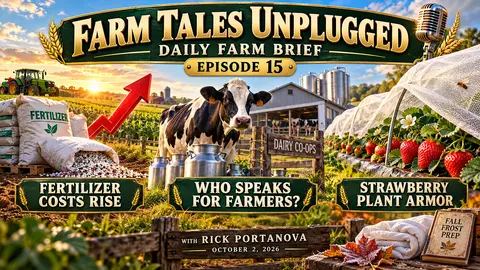
Plant armor is an innovative three-dimensional agricultural textile derived from military body armor research that physically blocks insect pests while tripling strawberry crop yields through enhanced microclimate regulation, natural light permeability, and effective passive thermal warming during critical growing phases.
Key Takeaways
- North Carolina State University researchers developed 'plant armor,' a 3D fabric designed to protect strawberry crops from insects while allowing vital sunlight and rain to pass through.
- Tunnel field trials revealed that covered strawberry plants produced up to 3.56 times the yield of uncovered control groups.
- The textile technology originally stems from military research focused on soldier comfort under body armor and protection against mosquito bites.
- Beyond insect exclusion, the fabric provides passive thermal warming that helps strawberry plants reach the fruiting stage earlier in the season.
- While trial results are exceptionally promising, growers must still evaluate commercial costs, durability, and multi-season performance.
The Surprising Intersection of Defense R&D and Modern Agriculture
Innovation often happens at the strangest intersections. When researchers at North Carolina State University set out to design specialized fabric structures for military applications, their primary goals had nothing to do with commercial agriculture. They were focused on keeping soldiers comfortable beneath heavy tactical gear and engineering effective textiles to prevent mosquito bites in hazardous environments. Yet, the physics of breathable, protective barrier fabrics apply just as effectively to fragile crops as they do to human operators in the field.
This cross-pollination of industries has birthed what researchers are calling "plant armor." By taking the textile engineering principles developed for defense and adapting them for high-value specialty crops, agronomists have unlocked a fascinating new method for protecting yields without instantly defaulting to heavy chemical applications. For specialty crop growers constantly battling aggressive pest pressures, this cross-industry leap represents a refreshing paradigm shift in crop protection technology.
How Plant Armor Delivers Triple-Digit Yield Improvements
The numbers coming out of the North Carolina State University tunnel field trials are nothing short of eye-opening. When researchers draped the specialized three-dimensional fabric over trial strawberry rows, the covered plants ultimately produced up to 3.56 times the yield of their uncovered counterparts. That is more than a marginal efficiency gain; it is a dramatic multiplication of total output.
Achieving this kind of leap requires solving multiple agricultural bottlenecks simultaneously. Traditional row covers often force a compromise: you either keep the bugs out, or you let enough light and air in to keep the plants thriving. Plant armor bypasses this traditional trade-off through a few distinct mechanisms:
- Unrestricted Light Access: Trial data showed no measurable reduction in photosynthetic light reaching the strawberry canopy beneath the fabric structure.
- Moisture Permeability: Rain and irrigation water pass effortlessly through the mesh, ensuring root zones remain adequately hydrated without manual lifting.
- Airflow and Respiration: Continuous air exchange prevents excessive humidity pockets that typically foster fungal pathogens.
- Physical Pest Exclusion: Laboratory and field testing confirmed that destructive pests like aphids are entirely blocked from reaching the plant tissue.
The Hidden Thermal Advantage
Beyond simply locking insects out of the production zone, the fabric provides an unexpected secondary benefit: thermal regulation. The structural weave traps a micro-layer of warmth around the developing plants. This passive warming effect encourages the strawberries to break dormancy and reach the crucial fruiting stage significantly earlier than unprotected crops. In high-value berry production, getting fruit to market even a week or two early can dramatically alter seasonal profitability.
Practical Considerations and What Comes Next
Naturally, whenever striking trial data hits the agricultural community, seasoned producers immediately ask the most important questions: What does it cost, how long does it hold up against severe weather, and can these results be replicated outside of controlled university tunnel trials?
While the initial science is remarkably sound, transitioning from experimental fabric to standard farm equipment requires rigorous on-farm testing across diverse geographic regions and microclimates. Growers operating on tight margins need to know whether the labor required to deploy and maintain the fabric offsets the dramatic yield increases observed in trials. Furthermore, UV degradation, wind resistance in open-field settings, and machine-handling durability will ultimately dictate whether plant armor becomes a staple of modern horticulture or remains an intriguing niche experiment.
To dive deeper into current agricultural trends, input cost pressures, and emerging farming technologies, make sure to Listen to the full episode of Farm Tales Unplugged for a fast, engaging look at what is shaping modern agriculture today.
Frequently Asked Questions
What is strawberry plant armor and how does it work?
Plant armor is an advanced three-dimensional fabric draped directly over strawberry crops. It creates a physical barrier that blocks destructive insects like aphids while remaining permeable to sunlight, moisture, and airflow.
How much did plant armor increase strawberry yields in trials?
In North Carolina State University tunnel field trials, covered strawberry plants produced up to 3.56 times the yield of traditional uncovered plants, more than tripling total output.
What is the connection between military gear and agricultural fabrics?
The technology underlying plant armor was originally developed from textile research intended for military clothing, specifically aiming to protect soldiers from mosquito-borne diseases and improve breathability beneath heavy body armor.
Does plant armor reduce the need for chemical pesticides?
Laboratory testing successfully kept aphids away without chemical intervention, and researchers believe widespread adoption could significantly reduce pesticide reliance, though broader on-farm trials are still required.

Rick is a broadcaster at heart, having built an internet radio network back in 1993. Back then they were called archived shows (mp3), the term podcast didn't exist but some people were already podcasting and he was one of them. Internet radio fizzled out fast when the Sirius satellites were launched and all the big networks inhaled all the programming. Here we are 30 years later. My how things have changed. Independent media put regular people on the same playing field and news and entertainment changed forever. His passion is being a boat captain and spending every minute with his little girl dog Mandy by his side.
His news delivery style is described as "Hit the fact, explain why anyone would care, make a joke and move on". He tears though things he believes will be worth a listener knowing and hoping he can get them to smile or chuckle. Much of the news is not "Happy news" and he realizes how hard things are for farmers and truckers, so he tries to keep it light and comical because no matter how bad things get we always need to find a way to laugh about it or we'd all go crazy.
If you want a passionate ally to dole out the news while mixing it up with funny short stories and odd side news, you will find his favorite program "Daily Farm Brief" a worthy 10 minutes of you weekday. He isn't very pc and he doesn't do boardrooms, he is difficult and overly direct. This makes his life 10x more difficult, but he is right at home behind the mic.
Autonomous Farm Drones vs. Traditional Crop Dusters: The Future of Acreage Coverage