Fertilizer Prices Rise, Dairy Co-op Concerns & Strawberry Plant Armor | Daily Farm Brief


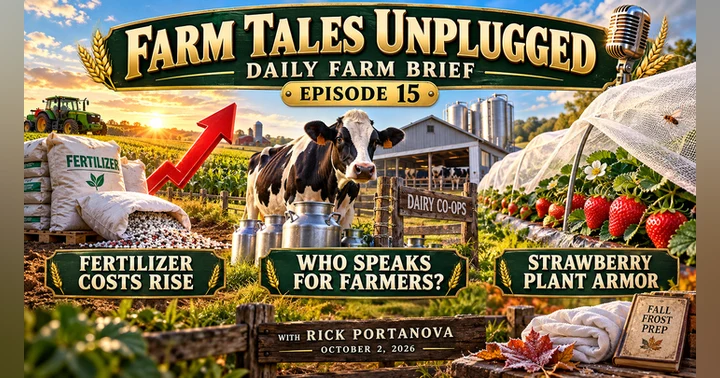
Fertilizer costs are climbing, dairy farmers face questions about cooperative consolidation, and new “Plant Armor” technology more than tripled strawberry yields in field trials. Rick Portanova breaks down what these developments mean for agriculture, plus practical fall frost advice from the Old Farmer’s Almanac. Join Farm Tales Unplugged — Daily Farm Brief for Friday, October 2, 2026: fast, engaging farm news for Farm Nation and Truck City.
Sponsored by World TradeX
Good morning, Farm Nation, and good morning, Truck City. This is FarmTales unplugged daily farm brief for Friday, October 2nd. I'm Rick Portonova. This morning, fertilizer prices are heading in the wrong direction, just as farmers start thinking about fall application. Apparently, getting next year's crop started also means getting next year's bills started. We've also got a fresh look at America's dairy cooperatives and what happens when the organization representing the farmer gets into the business of buying the farmer's milk. Then, researchers in North Carolina have developed something called plant armor. It keeps insects off strawberries, and the trial results are enough to make you stop and listen. And we'll finish up with the old farmer's almanac. So grab your coffee, fire up whatever you're driving, and let's find out what was happening while you were busy actually working. First up, the fertilizer bill is growing. Here's a fall development farmers could have done without. DTN's latest retail survey says all eight major fertilizers it tracks now cost more than it did a year ago. And hydrus ammonia is leading that increase. The national average reached $977 a ton during the third full week of September, up 6% from a month earlier and 25% from last year. Last year's comparable price was $780. That's nearly $200 more per ton for the same input. Urea is also higher than a year ago by 9%. Potash is a more modest 2%. Those are national averages. Your local dealer's quote can be different. And this isn't a claim that every product suddenly jumped this week. The comparison is with last year. Still, that's an uncomfortable direction when you're trying to pencil out the next crop. Nobody needs a lecture about working harder. The question is whether the numbers reward the work. And a price increase on something you need before you've produced anything to sell is a particularly irritating way to start. Story number two: who's looking out for the dairy farmer? This is a story about milk, money, and who gets a say. A report published this week by Investigate Midwest looks at how America's dairy cooperatives have consolidated. The number of dairy co-ops fell from more than 1,900 in 1952 to 107 in 2023, according to the data cited in the report. That's a long-term change brought back into focus by Fresh Reporting this week. The original idea behind a cooperative makes sense. Farmers join together so they have more bargaining power than they would individually. Co-ops can negotiate sales, arrange milk hauling, and make sure the product has somewhere to go. But some have also expanded into processing, owning businesses that turn milk into cheese, butter, and other products. That can create opportunities. It can also create competing interest. The GAO Government Accountability Office examined this in a 2019 report. It found that processing investments could improve farmers' earnings over the longer term while reducing earnings in the short term. It also found that growth and voting arrangements could affect farmers' control. In other words, bigger can bring benefits. The farmer still needs a meaningful voice in how the business works. The new reporting describes producers who have challenged their cooperatives over alleged conflicts of interest. Allegations aren't proof of wrongdoing, but the concern deserves attention. My takeaway: when you're the one getting up to milk the cows, farmer-owned oughta mean you can understand the decisions and have a say in them. That seems like a reasonable expectation before breakfast. Time for the high-tech moment. North Carolina State University has reported results from a fabric called plant armor. You drape it over strawberry plants. Its three-dimensional structure creates a physical barrier to insects while still allowing sunlight, rain, and airflow through. And in tunnel field trials, the covered plants produced as much as 3.56 times the yield of the uncovered plants. More than triple. That's a trial result, not a guarantee for every farm, but it certainly gets your attention. The researchers reported no reduction in light access. The cover also provided warming that helped the plants reach fruiting earlier. It's also kept aphids out in laboratory testing. The team says it could reduce pesticide use with broader on-farm testing still needed in different places and crops. And here's the unexpected part. The technology grew out of research on military clothing, including protection against mosquito bites and comfort under body armor. So work on protecting soldiers helped lead a way to protecting strawberries. I like that kind of invention. Somebody solves one problem, follows what they learn, and discovers an entirely different use. For growers, the next questions are practical. What does it cost? How does it hold up? And can the results be repeated under their conditions? Those answers will decide whether a striking experiment becomes useful farm equipment. And as we wind down, the old farmer's almanac. The almanac's fall reminder list is useful this weekend. Know which plants need protection before the first frost and have the covers ready. Beans, peppers, cucumbers, and other tender crops can be damaged from a light frost. Some tougher crops, including kale and cabbage, tolerate colder conditions. That means you don't have to treat the whole garden like everything expires on the same night. Also, an average first frost date is a planning tool. It isn't this weekend's forecast. Watch your local weather. And remember the low spots. Your garden can be colder than the temperature reported at the nearest station. The useful job today is finding the covers and figuring out what needs them. That beats hunting through the shed in the dark while the plants are already getting cold. And that'll do it for this Friday's edition of FarmTale's Unplugged Daily Farm Brief. This morning, we looked at fertilizer prices climbing ahead of fall application, the questions facing farmers as dairy cooperatives get larger, and strawberry protection that started with military textile research and delivered remarkable trial results. And the old farmer's almanac reminded us to get ready for the frost before the forecast turns into a scramble. To everybody in Farm Nation, keep doing the work that keeps the country fed. To everybody in Truck City, keep it safe out there and keep America moving. The future of food starts with the people who grow it and depends on the people who move it. I'm Rick Portanova, and this is FarmTale's Unplugged Daily Farm Brief. We'll see you Monday morning.