YouTube

 Apple Podcasts

 Spotify

 iHeartRadio

 Amazon Music

 Audible
The Corn Looked Ready… Until They Checked THIS! — Daily Farm Brief

Portanova 🌽 THE CORN LOOKED READY. BUT THERE WAS A BIG PROBLEM! Imagine looking across a cornfield that appears ready for harvest, only to discover the grain is still carrying far more moisture than expected. That's exactly the kind of surprise some Nebraska farmers faced this year. And it's a reminder that what you see from the combine cab doesn't always tell the whole story. Welcome to another edition of Daily Farm Brief, where we bring Farm Nation and Truck City the agricultural stories th...
Portanova
🌽 THE CORN LOOKED READY. BUT THERE WAS A BIG PROBLEM!
Imagine looking across a cornfield that appears ready for harvest, only to discover the grain is still carrying far more moisture than expected.
That's exactly the kind of surprise some Nebraska farmers faced this year. And it's a reminder that what you see from the combine cab doesn't always tell the whole story.
Welcome to another edition of Daily Farm Brief, where we bring Farm Nation and Truck City the agricultural stories that matter, along with a few surprises you probably didn't see coming.
🌽 FARM NEWS — THE DISEASE THAT DIDN'T SHOW UP
After southern rust caused serious concern in 2025, many corn growers prepared for another difficult season.
But something unexpected happened.
The widespread southern rust outbreak farmers feared never arrived.
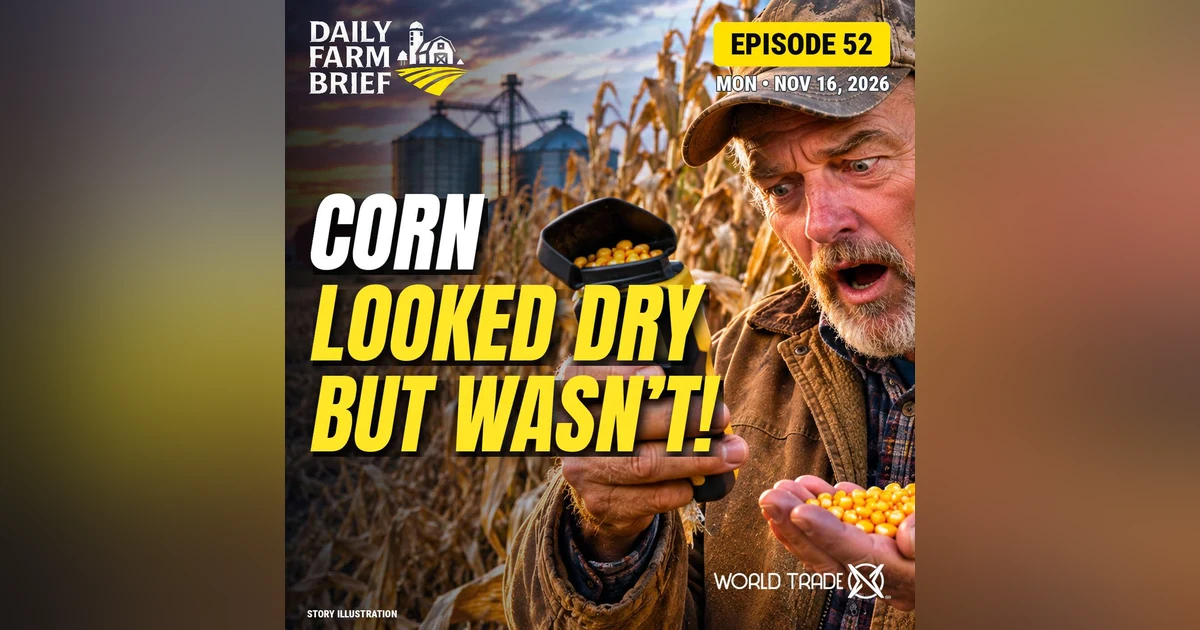
Meanwhile, other diseases—including tar spot—created their own problems. In some Nebraska fields, corn plants looked dry even though the kernels were still carrying substantial moisture.
We explore why farmers can't always plan next year's crop around last year's biggest threat, and how simple untreated comparison strips can help determine whether fungicide applications actually pay for themselves.
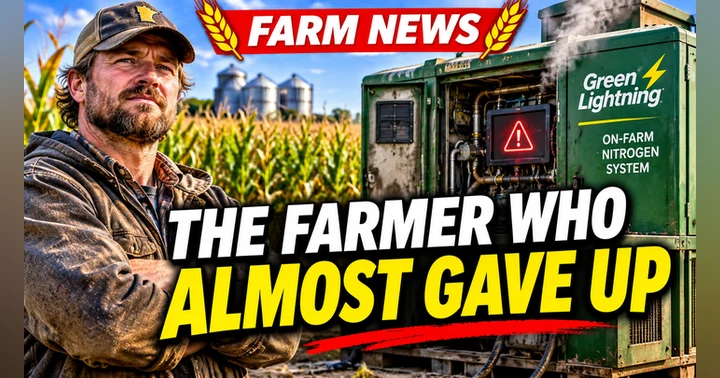
⚡ THE FARMER WHO ALMOST GAVE UP
What if you could make some of your own nitrogen fertilizer using air, water, and electricity?
Minnesota farmer Carson Kahler decided to try it with a machine called Green Lightning.
There was just one problem.
The darn thing kept breaking down!
He was ready to send it back—until harvest results gave him a reason to reconsider.
Could this technology eventually help farmers reduce conventional fertilizer costs without sacrificing yields?
The early results are intriguing, but equipment reliability, operating costs, and additional testing remain important questions.
🌠 THE OLD FARMER'S ALMANAC — LEONID METEOR SHOWER
There's something spectacular happening overhead!
The Leonid meteor shower peaks around November 17–18, giving early risers and night owls a chance to catch streaks of light across the sky.
Find out when to watch, where to look, and how debris from Comet Tempel-Tuttle creates this annual celestial display.
📈 FARM MARKET UPDATE
A quick, easy-to-follow look at the grain and livestock markets, with additional agricultural market information in our on-screen ticker.
YOUTUBE CHAPTERS
00:00 — Opening: The Corn That Fooled Farmers
Additional chapter timestamps will be added after the completed video is synchronized to the recorded WAV.
READ THE EXPANDED BLOG
For more information, additional agricultural stories, and today's matching blog, visit:
FARM NATION • TRUCK CITY
Daily Farm Brief brings you agricultural news, farm innovations, interesting discoveries, and stories from rural America.
Hosted by Rick Portanova
Sponsored by World TradeX — Empowering Farmers
If you enjoy the show, please LIKE, FOLLOW, and SHARE with a farmer, trucker, or anyone interested in where their food comes from.
Thanks for watching, and we'll see you tomorrow morning!
#DailyFarmBrief #FarmNews #CornHarvest #Agriculture #Farming #FarmTechnology #NitrogenFertilizer #LeonidMeteorShower
Sponsored by World TradeX
Here's something farmers might want to think about. Last year a corn disease had growers worried. This year they prepared for it again, but the disease largely failed to show up. And what did show up caught some farmers by surprise. Good morning, Farm Nation. This is Rick Portonova, and this is your daily farm brief for November 17th, Tuesday. Here's a question for you. How much of what you're planning for next year is based on what happened last year? Because this morning we've got a pretty good reason to rethink that. So grab your coffee and fire up whatever you're driving and let's get to work. Imagine spending money to fight an enemy that never arrives. That's pretty much what happened in some cornfields this year. Back in 2025, southern rust caused serious concerns across the Midwest. So naturally, farmers entered 2026 expecting another fight. The weather looked favorable for the disease, there was plenty of moisture, and temperatures were warm. But here's the surprise Southern rust never became the widespread threat many had anticipated. Now you might think that's wonderful news, and in one sense it certainly is. But here's where the story gets interesting. Some farmers had already stepped up their fungicide programs preparing for a repeat of last year. And that raises a question worth asking. Did those applications actually protect enough yield to pay for themselves? Iowa State University plant pathologist Allison Robertson has a practical solution. Leave untreated comparison strips in the field. Think about that. Instead of guessing whether your treatment worked, you've got an actual comparison right there at the harvest. But the surprises weren't over. Other diseases appeared, including tar spot and late season stock and ear rods. In parts of Nebraska, tar spot made corn plants look ready to harvest, even when grain moisture remained as high as 25 to 30 percent. Imagine looking across a field that appears ready, only to discover the grain isn't nearly as dry as the plant suggests. That's a costly assumption if you get it wrong. And here's the lesson I think every farmer can take away. Last year's biggest problem isn't necessarily next year's biggest problem. The smartest decision may not be the one that prepares you for what happened before, it may be the one that gives you enough information to respond to what's actually happening now. So here's my question. When you're planning next season, are you managing the field in front of you or the one you remember? What if you could make your own nitrogen fertilizer right on the farm, using nothing more than air, water, and electricity? Sounds pretty incredible, doesn't it? Well, Minnesota farmer Carson Kaylor decided to try it. He bought a machine called Green Lightning, but there was one big problem. The darn thing kept breaking down. He was ready to send it back, but then harvest came and something happened that changed his mind. The corn grown with less conventional fertilizer and his homemade nitrogen actually outperformed his regular fertilizer program. Now, before everybody rushes out to buy one, this was just one farmer's experiment and the results weren't consistent across every test. But think about the possibilities. What if a farmer could produce some of their own fertilizer, spend less money, and still bring in a good crop? That's a pretty exciting idea, and it might just be worth keeping that troublesome machine around for another season. Before we go, here's something worth looking up for. And I mean that literally. The Leonid Meteor Shower is reaching its peak around November 17th and 18th. Under ideal dark skies, observers could see as many as 15 meteors an hour, although most people will see fewer. And don't forget to make a wish. A mixed start to the week in farm markets, corn finished higher while soybeans and most wheat contracts slip lower. Cattle and hog futures also lost ground, giving back some of last week's gains as traders continue watching Export Demand and the Stronger Dollar. And there you have it. That's your daily farm brief for Tuesday, November 17th. Brought to you by World TradeX empowering farmers. I'm Rick Portonova. Thank you for spending part of your morning with me, and I'll see you tomorrow.