YouTube

 Apple Podcasts

 Spotify

 iHeartRadio

 Amazon Music

 Audible
Read the Milk Label: A Raw Milk Warning, Smarter Food Shopping & Garden Tips — Daily Farm Brief

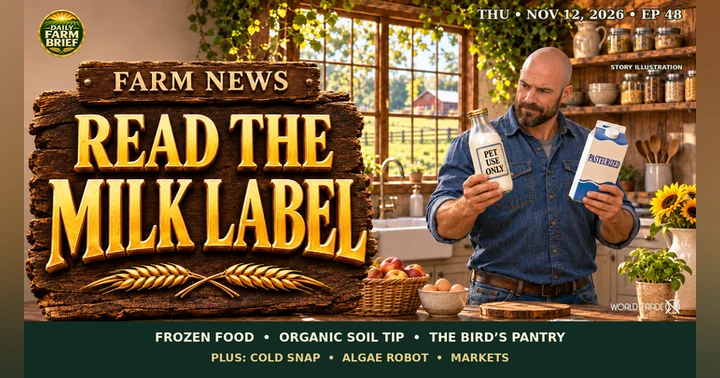
Milk labeled for pets is not a shortcut to safe milk for your family. A new Delaware warning raises two questions worth asking before you buy: Who is this product intended for, and has it been pasteurized?
Thursday, November 12, 2026 • Episode 48 • With Rick Portanova
🥛 READ THE MILK LABEL
We explain the difference between a pet-food registration and a raw-milk permit, why pasteurization matters, and why older adults and other higher-risk family members deserve particular care.
🥦 GIVE FROZEN A LITTLE CREDIT
Nutritious meals do not require buying every vegetable fresh. Simple label checks can help you choose frozen and canned produce that fits your budget, reduces waste, and leaves you in control of the salt and sauce.
🌱 ORGANIC GARDENING: TEST BEFORE YOU ADD
More compost is not always better. A soil test can help you avoid unnecessary amendments—including lime your garden may not need.
🐦 THE OLD FARMER’S ALMANAC: THE BIRD WITH A PANTRY
That chickadee flying away with a seed may be stocking tomorrow’s breakfast. A cheerful look at the small backyard bird with an impressive memory.
JUST THE ESSENTIALS
• A sharp cold snap, gusty winds, and a Southern freeze threat.
• A tiny experimental gripper powered by living algae and light.
MARKET WATCH
Wednesday’s grain close: corn slipped, while soybeans and wheat gained. The expanded on-screen ticker carries dated grain, oilseed, livestock, cotton, milk, cheese, dairy, energy and national fuel figures, followed by headlines, regional weather and the moon phase.
Read the expanded matching blog at https://dailyfarmbrief.com.
Like, follow, and share Daily Farm Brief with Farm Nation and Truck City. Brought to you by World TradeX—empowering farmers.
Sponsored by World TradeX
SPEAKER_00
Milk sold for pets is not a shortcut to safe milk for people. A new warning explains why that label matters. First, two farm headlines, just the essentials. A sharp cold sap is heading across the central and eastern United States, with gusty winds and a weekend freeze threat reaching into the south. And scientists have built a tiny robotic gripper powered by algae and light. It can pick up small objects in laboratory tests. Good morning, Farm Nation. Hello, Truck City. I'm Rick Portanova. Today, the milk warning worth sharing with your family. Why frozen vegetables deserve more respect? An organic gardening mistake that can waste your money and a little backyard bird hiding tomorrow's breakfast. So grab your coffee and fire up whatever you're driving, and let's find out what was happening while you were busy actually working. Because this is your daily farm brief for Thursday, November 12th. Here's the warning. On November 10th, Delaware agriculture officials said some raw milk available in the state was labeled for pets, not human consumption. Those producers had pet food registrations. This is not the same as a permit under the state's raw milk program. Officials said no permits under that program have been issued yet. For shoppers, the distinction matters. A farm name, a glass bottle, or a registration number doesn't answer the question: is this raw milk intended for people? And there's another question beyond the paperwork: has it been pasteurized? Raw milk has not undergone that heating step, which kills harmful germs. The CDC says good farm practices can reduce contamination, but they cannot guarantee raw milk safety. Adults 65 and older, young children, pregnant people, and people with weakened immune systems face greater risk from foodborne illness. Here's the reassuring part. Pasteurized milk provides the same nutritional benefits without the risk associated with drinking raw milk. Look for pasteurized on the label. If you're unsure, ask before buying and leave milk labeled for pets out of the family's drinking glasses. Now, a little relief for the grocery budget. You don't have to buy every vegetable fresh to put a nutritious dinner on your table. Colorado State University Extension says canned and frozen produce can be nutritious alternatives. Much of it is harvested at peak ripeness and processed soon afterward. That bag of frozen peas is not a nutritional surrender. Check what comes with those vegetables. Plain frozen vegetables give you control over the salt and sauce. For cans, compare sodium and consider no salt options. Choose fruit packed in water or its own juice instead of syrup. And there's a practical advantage. You can use what you need and keep the rest for another meal. Fresh is wonderful, but the vegetables you actually eat do more for dinner than that ambitious purchase wilting in the drawer. For today's organic gardening tip, before feeding the garden, find out whether it's hungry. Adding more compost every year can eventually build up too much of certain nutrients. Organic doesn't mean unlimited. A soil test can show your soil's acidity and nutrient status, helping you decide what to add and what to leave alone. Follow your local lab sampling instructions and tell it what you plan to grow. Especially resist adding lime just because somebody says gardens need it. Lime raises soil pH. If yours already is high enough, you may be fixing a problem you don't have to. Sometimes the best gardening starts with buying less. Now, the old farmer's almanac and a small bird with a surprisingly organized pantry. Watch a black-capped chickadee take a seed and disappear. It may not be eating lunch, it may be putting groceries away. The almanac notes that chickadees tuck food into tree crevices for later. Cornell's bird experts explain that these little birds use a strong memory for locations to find their hidden supplies. So that little visitor making repeated trips could be stocking several tiny cupboards around your yard. Sunflower seeds and suet are favorites in winter. I sometimes forget why I walked into the kitchen. That bird remembered which tree has breakfast. At Wednesday's close, corn slipped a penny, while soybeans and wheat finished higher. A stronger dollar pressured corn, while renewed buying supported soybeans and wheat after Tuesday's USDA report. For the extra facts behind today's story, read our expanded, detailed matching blog at DailyFarmBrief.com. And if you enjoyed our show, would you please like, follow, or share? Daily Farm Brief is brought to you by World TradeX empowering farmers. I'm Rick Portanova. Thank you for spending part of your morning with me. I'll see you tomorrow.