
 YouTube

 Apple Podcasts

 Spotify

 iHeartRadio

 Amazon Music

 Audible
Check Your Freezer! Hidden Allergens, Salad Surprise & Garden Tips — Daily Farm Brief
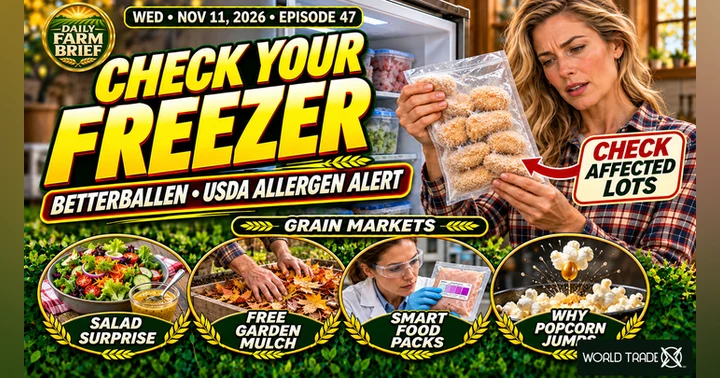
𝗬𝗼𝘂 𝗯𝘂𝘆 𝗮 𝗯𝗲𝗲𝗳 𝘀𝗻𝗮𝗰𝗸. 𝗬𝗼𝘂 𝗿𝗲𝗮𝗱 𝘁𝗵𝗲 𝗹𝗮𝗯𝗲𝗹. 𝗡𝗼𝘁𝗵𝗶𝗻𝗴 𝘀𝗮𝘆𝘀 𝗳𝗶𝘀𝗵—𝗯𝘂𝘁 𝘁𝗵𝗲𝗿𝗲’𝘀 𝗮𝗻𝗰𝗵𝗼𝘃𝘆 𝗶𝗻𝘀𝗶𝗱𝗲. Rick Portanova leads this Daily Farm Brief with a USDA public health alert for certain Betterballen frozen foods, the products to check and what to do if they’re in your freezer.
Then we follow the food from the label to your plate, into the garden and through a few surprises along the way.
𝗪𝗲𝗱𝗻𝗲𝘀𝗱𝗮𝘆, 𝗡𝗼𝘃𝗲𝗺𝗯𝗲𝗿 𝟭𝟭, 𝟮𝟬𝟮𝟲 • 𝗘𝗽𝗶𝘀𝗼𝗱𝗲 𝟰𝟳
𝗖𝗛𝗘𝗖𝗞 𝗬𝗢𝗨𝗥 𝗙𝗥𝗘𝗘𝗭𝗘𝗥
Certain Betterballen frozen meat and poultry products contain undeclared sesame. The beef product also contains undeclared fish through Worcestershire sauce. The November 6 USDA alert covers specific Bami Rolls, Saté Kroketten and Bitterballen lots with a best-by date of October 2027. They were sold online nationwide through Lowlands House, with possible sales at a festival and farmers market in Greer, South Carolina. The on-screen package check shows the product names, lot codes and inspection marks. USDA says to discard affected packages or return them.
𝗪𝗛𝗔𝗧 𝗔𝗥𝗘 𝗪𝗘 𝗘𝗔𝗧𝗜𝗡𝗚? — 𝗧𝗛𝗘 𝗦𝗔𝗟𝗔𝗗-𝗗𝗥𝗘𝗦𝗦𝗜𝗡𝗚 𝗦𝗨𝗥𝗣𝗥𝗜𝗦𝗘
Can the dressing you leave off help your body absorb certain compounds in the vegetables? We explain a small study’s finding, what it does—and doesn’t—tell us, and why “fat-free” is only part of the shopping decision.
𝗢𝗥𝗚𝗔𝗡𝗜𝗖 𝗚𝗔𝗥𝗗𝗘𝗡𝗜𝗡𝗚 — 𝗗𝗢𝗡’𝗧 𝗕𝗔𝗚 𝗨𝗣 𝗡𝗘𝗫𝗧 𝗬𝗘𝗔𝗥’𝗦 𝗦𝗢𝗜𝗟
Those autumn leaves can protect a cleared vegetable bed and eventually improve the soil. A practical tip for reusing leaves, removing diseased plants and letting a leaf pile do some work for next season.
𝗛𝗜𝗚𝗛-𝗧𝗘𝗖𝗛 𝗠𝗢𝗠𝗘𝗡𝗧 — 𝗔 𝗣𝗔𝗖𝗞𝗔𝗚𝗘 𝗧𝗛𝗔𝗧 𝗦𝗜𝗚𝗡𝗔𝗟𝗦 𝗦𝗣𝗢𝗜𝗟𝗔𝗚𝗘
Researchers are testing a packaging film that responds to compounds released as meat spoils. Color and fluorescent signals could offer useful clues. It remains research, not a guarantee that food is safe to eat.
𝗧𝗛𝗘 𝗢𝗟𝗗 𝗙𝗔𝗥𝗠𝗘𝗥’𝗦 𝗔𝗟𝗠𝗔𝗡𝗔𝗖 — 𝗪𝗛𝗬 𝗣𝗢𝗣𝗖𝗢𝗥𝗡 𝗝𝗨𝗠𝗣𝗦
A tough shell, a little trapped moisture and a surprising first “leg” help explain the familiar show in the popcorn pan. From a farmer’s field to movie-night entertainment.
𝗤𝗨𝗜𝗖𝗞 𝗙𝗔𝗥𝗠 𝗛𝗘𝗔𝗗𝗟𝗜𝗡𝗘𝗦 — 𝗝𝗨𝗦𝗧 𝗧𝗛𝗘 𝗘𝗦𝗦𝗘𝗡𝗧𝗜𝗔𝗟𝗦
• After 30 years of no-till, Matt Moreland describes returns from smarter inputs, fewer repairs and steadier yields.
• Dubai’s Bustanica grows greens hydroponically with recycled nutrient-rich water; the farm reports using up to 95% less water than traditional outdoor farming.
𝗪𝗔𝗧𝗖𝗛 𝗧𝗛𝗘 𝗕𝗢𝗧𝗧𝗢𝗠 𝗧𝗜𝗖𝗞𝗘𝗥
Dated agricultural futures and other markets run together, followed by farm news, regional weather and moon phase, then repeat. Larger, readable cards carry the extra information while the stories continue.
𝗥𝗘𝗔𝗗 𝗢𝗨𝗥 𝗗𝗘𝗧𝗔𝗜𝗟𝗘𝗗 𝗠𝗔𝗧𝗖𝗛𝗜𝗡𝗚 𝗕𝗟𝗢𝗚
Find extra facts and context at 𝗱𝗮𝗶𝗹𝘆𝗳𝗮𝗿𝗺𝗯𝗿𝗶𝗲𝗳.𝗰𝗼𝗺.
Hosted by 𝗥𝗶𝗰𝗸 𝗣𝗼𝗿𝘁𝗮𝗻𝗼𝘃𝗮 for Farm Nation and Truck City.
Brought to you by 𝗪𝗼𝗿𝗹𝗱 𝗧𝗿𝗮𝗱𝗲𝗫 — 𝗘𝗺𝗽𝗼𝘄𝗲𝗿𝗶𝗻𝗴 𝗙𝗮𝗿𝗺𝗲𝗿𝘀.
Sponsored by World TradeX
SPEAKER_00
Farm News headlines, just the essentials. After 30 years of no-till, farmer Matt Moreland says regenerative agriculture is paying off through smarter inputs, fewer repairs, and steadier yields. And Dubai's Bistanica Vertical Indoor Farm grows greens without soil and says its recycled water system uses up to 95% less water than traditional outdoor farming. Good morning, Farm Nation. I'm Rick Portonova. This is Daily Farm Brief for Wednesday, November 11th, Veterans Day. Today, the ingredients missing from a frozen food label, a salad dressing surprise, an organic gardening tip that starts with your leaf pile, packaging that could warn when food spoils and why popcorn jumps out of the pan. So grab your coffee, fire up whatever you're driving, and let's find out what was happening while you were busy actually working. You buy a beef snack, you check the label, nothing says fish, but there's anchovy inside. That's part of a USDA public health alert involving better ballin foods. That's part of the USDA's public health alert involving better ballin foods. Its frozen meat and poultry products contain undeclared sesame. The beef item also contains fish through Worcestershire sauce. Look for six-piece Bonnie rolls, ten-piece date croquettin, and twelve-piece bitter ballin. The affected packages have a Best Buy date of October 27. They were sold online nationwide through Lowland's House with possible sales at a festival and farmers market in Greer, South Carolina. USDA issued the alert November 6th. Why the alert and not a recall? The products were no longer available for purchase, but they could still be sitting in somebody's freezer. Inspectors caught the problem during a label review. No confirmed adverse reactions have been reported. USDA says don't eat the affected products, throw them away, or return them. Match the product and lock code against the notice. We'll show those codes on the screen. Now, from what's missing on the label to something you might be leaving off your plate. You build a beautiful salad, then skip the dressing because you're trying to eat better. Could you be missing something? Some of the plant compounds in those vegetables are absorbed better when you eat them with fat. In a small Iowa State study, seven adults ate salads with dressing containing different amounts of canola oil. Researchers measured much greater absorption of certain vegetable pigments when the dressing contained oil than when it was fat-free. That doesn't make a plain salad worthless, and it doesn't mean more dressing is always better. This measured nutrient absorption, not whether people lived longer or avoided disease. Here's the shopping tip: look beyond the words fat-free. Compare serving sizes, sodium, and added sugar too. A little dressing can have a job to do, besides making the lettuce taste good. That's useful to know before you leave it in the refrigerator. Before you haul those fallen leaves to the curb, save some for your vegetable garden. University of Minnesota Extension recommends covering cleared raised beds with two to four inches of mulch. Shredding leaves are one option. They help protect the soil, discourage weeds, and return organic matter as they break down. First, remove diseased plants. You don't want to tuck a blighted tomato vine into that bed for the winter. Got more leaves than garden? Iowa State Extension suggests piling them up in a corner to make leaf mold. Shredding speeds things along, but expect a year or two for an ordinary pile. It's a slow job the leaves can do without you standing there. Next season's soil improvement may already be lying in your yard. What if a package could tell you something the date couldn't? Researchers at Japan's Kyushu University have developed a film that changes color as meat spoils. It uses milk protein and pigments from black soybean seed coats, along with other materials. The film responds to compounds released during spoilage. In refrigerated mutton tests, it changed color, and its fluorescent signal changed under ultraviolet light. It's research, not a guarantee that a package is safe to eat. It doesn't detect every food hazard. But imagine the useful part: a visible clue about what's happening inside before you open the package. Let's open the old farmer's almanac. You put hard little kernels in a pan. A few minutes later, Supper's Entertainment starts jumping around. The old farmer's almanac explains that each popcorn kernel has moisture trapped inside a tough shell. Heat turns that moisture into steam. Pressure builds, the starch softens, and finally the shell gives way. The starch expands into that white puff. The popcorn board says the first bit coming out forms a little leg that launches the kernel as the rest follows. That jump is part of the popping. And sweet corn won't do the same job. Popcorn has a particular shell and a starchy interior that you need for this trick. A farmer grew it, a little trapped water put on the show. Be sure to check our ticker at the bottom for the most current numbers. At today's close, corn, soybeans, and wheat all finished higher with soybeans leading the rally. USDA's reduced corn crop estimate helped support prices, and the soybean crop increase was smaller than traders expected. Cattle also gained while cotton and lean hogs edged lower. To the veterans listening this morning, thank you for your service. For the extra facts behind today's stories, read our detailed matching blog at dailyfarmbrief.com. This has been your Daily Farm Brief brought to you by World TradeX, empowering farmers. I'm Rick Portonova. Thank you for spending part of your morning with me. And we'll see you tomorrow.