From Satellite Crop Monitoring to Wild West Barb Wire: Today's Rural Roundup
Welcome back, listeners and readers, to another deep dive into the stories shaping our agricultural landscape. If you caught today’s episode of the podcast, you know we covered a fascinating cross-section of rural life, touching on everything from high-altitude space technology to the gritty history of the American frontier. For those of you who want to explore these topics a bit further, or prefer to digest your agriculture news with your morning coffee in written form, you are in the right place.
Rural communities are constantly evolving. We often think of farming and ranching as traditions steeped in the past—and they certainly are—but they are equally driven by cutting-edge innovation, economic grit, and a deep, abiding connection to the natural world. Today, we are unpacking the modern tech revolutionizing how we look at our fields, the grassroots economic movements empowering independent ranchers, the brilliant winter survival strategies of nature's greatest engineers, and the sharp-pointed history that forever changed the open range.
Let's dive into today's rural roundup.
Eye in the Sky: How Satellite M-Net Imaging is Changing Crop Management
When most of us picture farming, we think of dirt under the fingernails, calloused hands gripping a steering wheel, and walking the rows to check for pests or disease. While those traditional methods will never truly go out of style, the modern farmer now has a pair of eyes looking down from several hundred miles above the Earth.
In recent years, satellite technology has transformed from a tool of weather forecasters and national security agencies into an indispensable asset for commercial and family-owned farms alike. Specifically, the rise of M-Net satellite imaging is giving agronomists and producers a real-time pulse on crop health that was previously unimaginable.
What is M-Net Imaging and How Does It Work?
To understand why this is such a game-changer, we have to look at what these satellites are actually seeing. M-Net systems utilize advanced multispectral imaging. While the human eye sees a crop field as a blanket of green, a multispectral satellite captures wavelengths of light well beyond our visual spectrum, including near-infrared light.
Healthy, vibrant crops reflect a tremendous amount of near-infrared light, whereas stressed crops—whether suffering from drought, nutrient deficiency, or disease—reflect much less. By translating this data into colorful, easy-to-read topographical maps, satellite M-Net systems allow farmers to spot trouble spots in a 500-acre field before symptoms are even visible to a worker walking the perimeter.
Precision Agriculture in Action
The real beauty of this technology lies in precision agriculture. Instead of applying fertilizer, water, or pesticide uniformly across an entire field—which wastes money and can harm the local ecosystem—farmers can use satellite data to practice variable-rate application.
Imagine a massive cornfield where one corner is struggling with nitrogen depletion due to soil runoff. In the past, the farmer might have noticed stunted growth weeks too late and applied a blanket treatment to the whole field. Today, an M-Net satellite flags the exact coordinates of the deficiency. The farmer uploads that digital map straight to the tractor's guidance system, and the spreader applies fertilizer exclusively to the struggling zone.
This targeted approach slashes input costs, protects groundwater from chemical over-application, and ultimately boosts yields. The eye in the sky is no longer just a futuristic concept; it is the ultimate farmhand for the twenty-first-century producer.
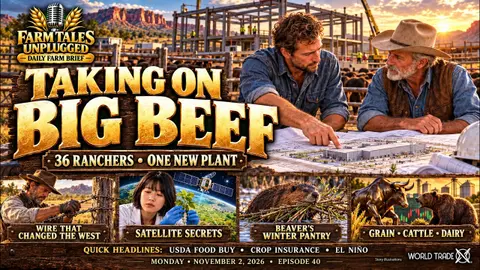
Texas Ranchers Take Control: The New Wave of Independent Meat Processing Plants
Moving from the skies down to the pastures of the Lone Star State, our next story tackles a massive economic bottleneck that has plagued the livestock industry for years: meat processing.
If you raise cattle, hogs, or sheep, the actual act of growing the animal is only half the battle. Once the livestock is ready for market, it has to be processed. For decades, the American meat processing sector has been heavily consolidated. A tiny handful of massive, multinational packing conglomerates control the vast majority of the processing capacity in the United States. This leaves independent ranchers at the mercy of corporate pricing, lengthy waitlists to get animals processed, and vulnerable supply chains.
When major processing plants experience labor shortages, cyberattacks, or supply chain bottlenecks, the entire system grinds to a halt. Ranchers are left holding animals longer—costing a fortune in feed—while grocery store shelves run empty and beef prices skyrocket for consumers.
The Rise of the Independent Co-Op
Tired of being squeezed by the corporate middlemen, Texas ranchers are fighting back. Across the state, we are seeing a remarkable grassroots wave of independent, producer-owned meat processing plants opening their doors.
These aren't massive, multi-national slaughterhouses. Instead, they are regional, state-inspected or USDA-inspected facilities built by co-ops of local ranchers who pooled their resources. By taking control of the processing pipeline, these producers are achieving true vertical integration. They raise the cattle, process the meat locally, and market it directly to local consumers, restaurants, and regional grocery stores.
Economic Resilience and Consumer Connection
The benefits of this movement are rippling outward across the rural economy. First and foremost, it creates local jobs. A processing plant requires skilled butchers, packaging technicians, logistics coordinators, and administrative staff. These are good-paying, stable jobs that stay in rural communities rather than funneling profits back to corporate headquarters in distant cities.
Secondly, it gives consumers what they increasingly crave: transparency and traceability. When you buy a steak from a locally processed, rancher-owned co-op, you often know the exact county, and sometimes even the specific pasture, where that animal was raised. As this trend catches fire in Texas and begins inspiring similar ventures across the Midwest and West, it just might redefine how America gets its protein.
Nature's Farmers: How Beavers Store Winter Food Under the Ice
While humans rely on satellites and co-op packing plants to navigate the challenges of the seasons, the animal kingdom has its own master planners. As winter approaches, we often talk about hibernation, but some of nature's most industrious creatures take a completely different approach: they prepare a massive, underwater pantry.
Enter the North American beaver. Often maligned as a nuisance for felling trees and flooding backroads, the beaver is actually a keystone species and a brilliant ecological engineer. When the ponds and rivers freeze over, most wildlife struggles to find sustenance. But the beaver? The beaver is dining like royalty on a multi-course underwater feast.
The Underwater Larder
Long before the first snowflake falls, beaver colonies go into overdrive. They cut down deciduous trees—aspens, willows, and poplars are favorites—and chop them into manageable branches. Instead of dragging these branches into their lodge, they sink them to the muddy bottom of their pond, right near the entrance of their underwater home.
This underwater stash is known as a food cache or "food larder." But why underwater? The physics of the beaver's caching strategy are nothing short of genius:
- Preservation: The cold, oxygen-poor water at the bottom of a frozen pond acts like a natural refrigerator, slowing down decomposition and keeping the bark fresh and palatable all winter long.
- Protection: Stashing the food underwater keeps it out of reach of opportunistic winter scavengers like coyotes, wolves, and bears.
- Accessibility: When the pond freezes solid on top, the beaver simply swims out of its underwater lodge entrance, cruises along the bottom, selects a choice branch from the pile, and brings it back inside to nibble on the cambium layer—the nutritious inner bark.
The Master of Winter Survival
It is a masterclass in preparation and resource management. While we humans rush to the grocery store to stock up on canned goods before a blizzard, beavers are engineering complex aquatic storage systems that ensure their entire family survives the harsh winter months in absolute security. Next time you see a beaver dam, take a moment to appreciate the sophisticated survival infrastructure happening right beneath the ice.
Ticking Down the Frontier: The History and Impact of Barbed Wire in the Old West
To wrap up today’s rural roundup, we are hopping in our metaphorical time machine and heading back to the late nineteenth-century American frontier. If you’ve ever driven down a rural backroad, you’ve undoubtedly seen miles of barbed wire fencing stretching out toward the horizon. It is so ubiquitous today that we rarely give it a second thought. Yet, the invention of barbed wire fundamentally altered the geography, economy, and culture of the American West.
The Problem of the Open Range
Following the Civil War, the American West was defined by the concept of the open range. Millions of cattle grazed freely across vast, unfenced expanses of public and private land. Cowboys drove massive herds north from Texas along trails like the Chisholm Trail to railway hubs in Kansas.
However, this system had a fatal flaw. As homesteaders pushed westward under the Homestead Act, they began farming and claiming parcels of land. Without fences to protect their crops, these farmers were constantly at war with cattlemen whose herds would wander through and trample their livelihoods. At the same time, traditional wooden fencing materials like timber or stone were virtually non-existent on the treeless, arid plains of the Great Plains.
Fencing a ranch with wood was simply too expensive and impractical.
The Devil’s Rope Changes Everything
That all changed in the 1870s with the invention and commercialization of barbed wire—often referred to by cowboys at the time as "the devil's wire" or "the devil's rope."
While several inventors tinkered with spiked wire designs, it was a farmer and promoter named Joseph Glidden who patented the most successful design in 1874. Glidden used a coffee mill to twist two strands of wire together while locking sharp, pointed wire barbs between them. It was cheap to produce, easy to ship, and durable enough to withstand harsh prairie winds and charging livestock.
The impact was immediate and profound:
- The End of the Open Range: Within a decade, millions of acres of public domain and open range were hastily fenced off by cattle barons and homesteaders alike. This effectively ended the era of the classic, unrestricted cattle drive.
- Range Wars: The sudden privatization of land sparked violent conflicts known as "range wars," pitting wealthy cattle ranchers against small farmers and fence-cutting vigilantes who viewed the wire as an assault on their way of life.
- Modern Agriculture: Despite the growing pains, barbed wire allowed farmers to selectively breed cattle, manage grazing rotation, and protect crops, laying the groundwork for the modern, structured livestock industry we know today.
From a few twists of galvanized wire, the entire landscape of the American West was redrawn. It is a powerful reminder that sometimes the smallest inventions have the most massive historical footprints.
Conclusion and Final Farm Brief Thoughts
As we wrap up today's blog post and reflect on the diverse topics we’ve covered, one theme consistently shines through: adaptation.
Whether we are looking at a modern farmer utilizing satellite M-Net imaging to monitor nitrogen levels from outer space, Texas ranchers building independent processing plants to reclaim control of their economic destiny, beavers engineering underwater pantries to outsmart the winter freeze, or nineteenth-century homesteaders stretching barbed wire across the windswept prairie, survival and success in rural environments have always depended on innovation and resilience.
The challenges facing our agricultural communities today are unique, but the spirit solving them remains the same as it has always been. Thank you for tuning into the podcast and reading along with the blog. If you enjoyed this breakdown, make sure to subscribe to the show, share this post with a fellow agriculture enthusiast, and join us next time as we continue exploring the heartbeat of the countryside.
Until next time, keep your boots clean, your fences mended, and your eyes on the horizon.
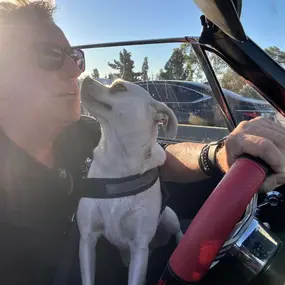
Rick is a broadcaster at heart, having built an internet radio network back in 1993. Back then they were called archived shows (mp3), the term podcast didn't exist but some people were already podcasting and he was one of them. Internet radio fizzled out fast when the Sirius satellites were launched and all the big networks inhaled all the programming. Here we are 30 years later. My how things have changed. Independent media put regular people on the same playing field and news and entertainment changed forever. His passion is being a boat captain and spending every minute with his little girl dog Mandy by his side.
His news delivery style is described as "Hit the fact, explain why anyone would care, make a joke and move on". He tears though things he believes will be worth a listener knowing and hoping he can get them to smile or chuckle. Much of the news is not "Happy news" and he realizes how hard things are for farmers and truckers, so he tries to keep it light and comical because no matter how bad things get we always need to find a way to laugh about it or we'd all go crazy.
If you want a passionate ally to dole out the news while mixing it up with funny short stories and odd side news, you will find his favorite program "Daily Farm Brief" a worthy 10 minutes of you weekday.

Screwworm Alerts, Acorn Farming Secrets, and Electric Weed Zappers