From Robotic Harvesters to Bird Flu: The Wild Future of Modern Farming
Welcome back to the podcast, everyone! Today, we are unpacking one of the most fascinating and complex paradoxes in the modern world: the state of contemporary agriculture. If you think farming is just about getting your hands dirty in the soil, think again. Today's farmers are operating at the intersection of high-stakes biology, cutting-edge artificial intelligence, renewable energy engineering, and, occasionally, a little bit of ancient folklore.
In this episode-companion blog, we are going to expand on the topics we covered on the air. We will take a deep dive into the dual-use wonders of agrivoltaics, look closely at the urgent biosecurity threats facing poultry producers today, marvel at the robotic revolution taking over our orchards, and even take a whimsical detour into the mystical world of mushroom circles. Buckle up, because the wild future of modern farming is already here.
Navigating the High-Tech and High-Risk Ag Landscape
To truly understand modern agriculture, you have to appreciate the sheer tightrope walk that farmers perform every single day. On one side of the ledger, we have unprecedented technological innovation. We are talking about machines that can delicately pick a ripe strawberry without bruising it, and solar energy systems that allow a single piece of land to harvest both electricity and crops simultaneously. On the other side, we face intense systemic vulnerabilities, ranging from volatile global trade markets—like those we analyze through our partnership with World TradeX—to microscopic pathogens that can devastate an entire livestock operation in a matter of days.
Farming has always been a gamble with Mother Nature, but today's stakes are magnified by global connectivity, climate shifts, and rapidly evolving technology. Let us break down the specific trends and challenges shaping the fields right now.
Navigating the Bird Flu Crisis: What Farmers Need to Know Right Now
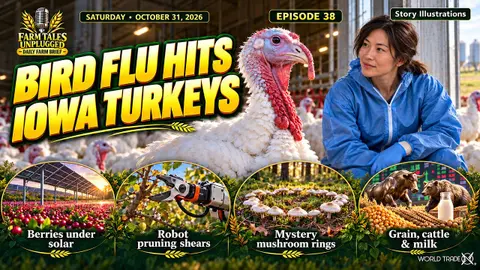
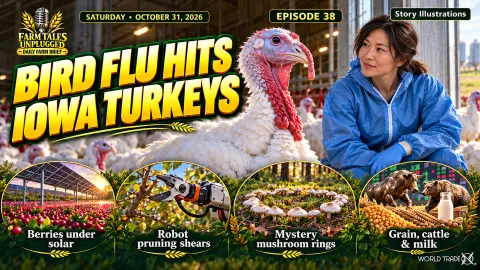
We have to start with the most pressing biosecurity issue dominating headlines and keeping agricultural producers up at night: the ongoing threat of avian influenza, commonly known as bird flu.
Understanding the Current Outbreak
Over the past few years, highly pathogenic avian influenza (HPAI) has wreaked havoc on poultry flocks across the globe. What makes this particular strain so terrifying for farmers is its relentless persistence and how easily it can be spread by wild migratory birds. Unlike traditional localized outbreaks, this strain has proven capable of surviving varying weather conditions, crossing species barriers, and presenting a constant, looming threat to both commercial and backyard operations.
Biosecurity Protocols on the Front Lines
For farmers, biosecurity is no longer just a checklist; it is an absolute way of life. Producers are locking down their facilities tighter than ever before. We are seeing strict quarantine zones, mandatory vehicle disinfection stations, air filtration upgrades in massive poultry barns, and the complete elimination of outside visitors. Farm managers are treating their barns essentially like biological cleanrooms.
However, the psychological and financial toll on farmers is immense. When a flock tests positive, the protocols often require total depopulation to stop the spread. This leads to massive economic losses and deep emotional distress for farmers who have spent months raising these animals. Government agencies and agricultural extension offices are stepping up mental health resources, recognizing that the human element of this crisis is just as critical as the biological one.
The Broader Economic Impact
The ripple effects of the bird flu crisis extend far beyond the farm gate. Consumers see it directly in the grocery store aisle through fluctuating egg prices and poultry shortages. It highlights a vulnerable link in our food supply chain—one that relies heavily on massive, concentrated production facilities. As we look to the future, agricultural scientists are researching genetic resistance in poultry breeds to see if we can breed animals that are naturally immune to HPAI. Until then, vigilance remains our best defense.
Sunlight and Shadows: The Rise of Agrivoltaics on Dual-Use Croplands
Shifting gears from crisis management to visionary innovation, let us talk about one of the most exciting trends in land management today: agrivoltaics. If you have ever driven through the countryside and wondered why we have to choose between putting up solar farms and growing crops, agrivoltaics is the brilliant answer to that dilemma: why not do both?
How Agrivoltaics Works
Agrivoltaics is the simultaneous use of areas of land for both solar photovoltaic power generation and agriculture. Instead of clearing a field of vegetation to lay down acres of flat, light-absorbing panels, farmers are installing elevated solar arrays or vertical panels that leave plenty of space underneath and between them for tractors, livestock, and crops.
The synergy here is nothing short of miraculous. Many crops actually suffer when they receive too much direct, blistering sunlight during peak summer months. By placing semi-shaded solar panels above them, farmers provide these delicate plants—such as leafy greens, berries, and root vegetables—with relief from heat stress, which can dramatically reduce the amount of water the crops need through evaporation.
The Benefits for Farmers and Energy Grids
The advantages are multifaceted:
- Water Conservation: Shaded soil retains moisture longer, leading to lower irrigation costs and better drought resilience.
- Crop Yield Optimization: Certain shade-tolerant crops thrive under partial solar cover, sometimes even producing higher yields.
- Dual Revenue Streams: Farmers are no longer entirely at the mercy of commodity crop prices. By generating and selling electricity back to the grid, they create a steady, reliable secondary income.
- Panel Efficiency: Believe it or not, solar panels actually become less efficient when they get too hot. The microclimate created by transpiring plants underneath the panels can cool them down, thereby increasing their electrical output.
As zoning laws catch up to this technology, expect to see agrivoltaics become a standard feature of the modern agricultural landscape. It is a masterclass in efficiency and sustainability.
The Robot Revolution: Pruners and Harvesters Taking Over the Fields
If agrivoltaics is changing how land is used, robotics is completely transforming how labor is performed. For decades, agriculture has faced a chronic labor shortage. Harvesting delicate fruits and vegetables has historically required an army of human hands. Today, that army is increasingly made of silicon, steel, and advanced machine learning algorithms.
AI-Powered Perception in the Orchard
Building a robot that can drive a tractor down a straight line is old news. Building a robot that can navigate a dense apple orchard, identify which apples are ripe based on color and size, gently grasp them with a pneumatic soft-gripper, and place them in a bin without a single bruise? That is science fiction come to life.
Modern ag-robots use computer vision and artificial intelligence. Cameras scan the foliage in real-time, while neural networks process the visual data instantly. These systems can estimate yield, detect early signs of plant disease on individual leaves, and selectively harvest produce over multiple passes as different fruits ripen at different rates.
Weeding, Pruning, and Beyond
Harvesting is just the tip of the iceberg. We are now seeing autonomous weeders equipped with lasers that can identify a weed among crop sprouts and zap it with pinpoint laser accuracy, eliminating the need for blanket herbicide applications. Autonomous pruners are trimming grapevines and fruit trees during the off-season, mimicking the precise cuts of master horticulturists based on predictive yield models.
While some worry about the displacement of agricultural labor, many industry experts view these technologies as a necessary evolution. By taking over the most back-breaking, repetitive, and ergonomically punishing tasks, robots allow human workers to transition into higher-level management, maintenance, and operational roles. Farming is becoming a high-tech career path that attracts a brand-new generation of tech-savvy operators.
From Science to Lore: The Fascinating Mystery of Mushroom Circles
Now that we have covered solar energy, robotics, and infectious disease, it is time for the segment of our show and blog where we take a delightful detour into the strange and mysterious side of the natural world: mushroom circles, commonly known as fairy rings.
The Folklore of Fairy Rings
For centuries, humans stumbling upon a perfect circle of mushrooms in a forest or pasture felt a sense of awe and a touch of apprehension. In European folklore, these mystical rings were believed to be dancing grounds for fairies, elves, or witches. Local legends warned mortals not to step inside a fairy ring, lest they be forced to dance until they collapsed of exhaustion, or worse, vanished into the spirit realm entirely. Some cultures viewed them as portals to another world, while others believed they marked the spots where fairies churned their butter or where mischievous sprites danced under the moonlight.
The Real Science Behind the Rings
As charming as the folklore is, the scientific reality of how fairy rings form is just as fascinating, albeit a bit less magical. These rings are actually the visible fruiting bodies of underground fungal networks (mycelium).
It starts with a single spore landing in the soil. The fungus grows outward in a roughly circular pattern, expanding evenly in all directions as it consumes organic matter and nutrients in the soil. Over time, the center of the colony depletes the available nutrients and dies off, while the active leading edge continues to expand outward in a ring. When weather conditions are right—usually after a good rain—the fungus sends up its reproductive structures, the mushrooms, all along the outer perimeter of this invisible underground wheel, creating the iconic circle we see on the surface.
So, while you might not find dancing elves in the center of a mushroom ring, you are witnessing a massive, living organism executing a perfectly symmetrical geometry beneath your feet. It is a wonderful reminder that nature still holds plenty of wonder for those willing to look closely.
Conclusion: Wrapping Up Today's Farm Brief with World TradeX
As we wrap up today's deep dive, it is clear that modern farming is a masterclass in balancing extremes. On one hand, producers are wrestling with severe biological threats like avian influenza, requiring unprecedented biosecurity and resilience. On the other hand, they are leaning into a breathtaking wave of innovation—harnessing the sun with agrivoltaics, deploying AI-driven harvesting robots into the fields, and still pausing to appreciate the natural mysteries of a simple mushroom circle.
Agriculture is the bedrock of human civilization, but it refuses to stand still. By embracing technology while respecting the timeless rhythms of nature and lore, farmers are building a future that is resilient, sustainable, and endlessly fascinating.
Thank you for reading along with our episode companion blog. Be sure to subscribe to the podcast, share this post with your fellow ag-tech enthusiasts, and check out our partners at World TradeX for more insights into how global markets are shifting in response to these incredible agricultural trends. Until next time, keep growing, keep exploring, and stay curious!

Rick is a broadcaster at heart, having built an internet radio network back in 1993. Back then they were called archived shows (mp3), the term podcast didn't exist but some people were already podcasting and he was one of them. Internet radio fizzled out fast when the Sirius satellites were launched and all the big networks inhaled all the programming. Here we are 30 years later. My how things have changed. Independent media put regular people on the same playing field and news and entertainment changed forever. His passion is being a boat captain and spending every minute with his little girl dog Mandy by his side.
His news delivery style is described as "Hit the fact, explain why anyone would care, make a joke and move on". He tears though things he believes will be worth a listener knowing and hoping he can get them to smile or chuckle. Much of the news is not "Happy news" and he realizes how hard things are for farmers and truckers, so he tries to keep it light and comical because no matter how bad things get we always need to find a way to laugh about it or we'd all go crazy.
If you want a passionate ally to dole out the news while mixing it up with funny short stories and odd side news, you will find his favorite program "Daily Farm Brief" a worthy 10 minutes of you weekday.
Tropilaelaps Mites: The Emerging Beehive Parasite Threatening U.S. Agriculture