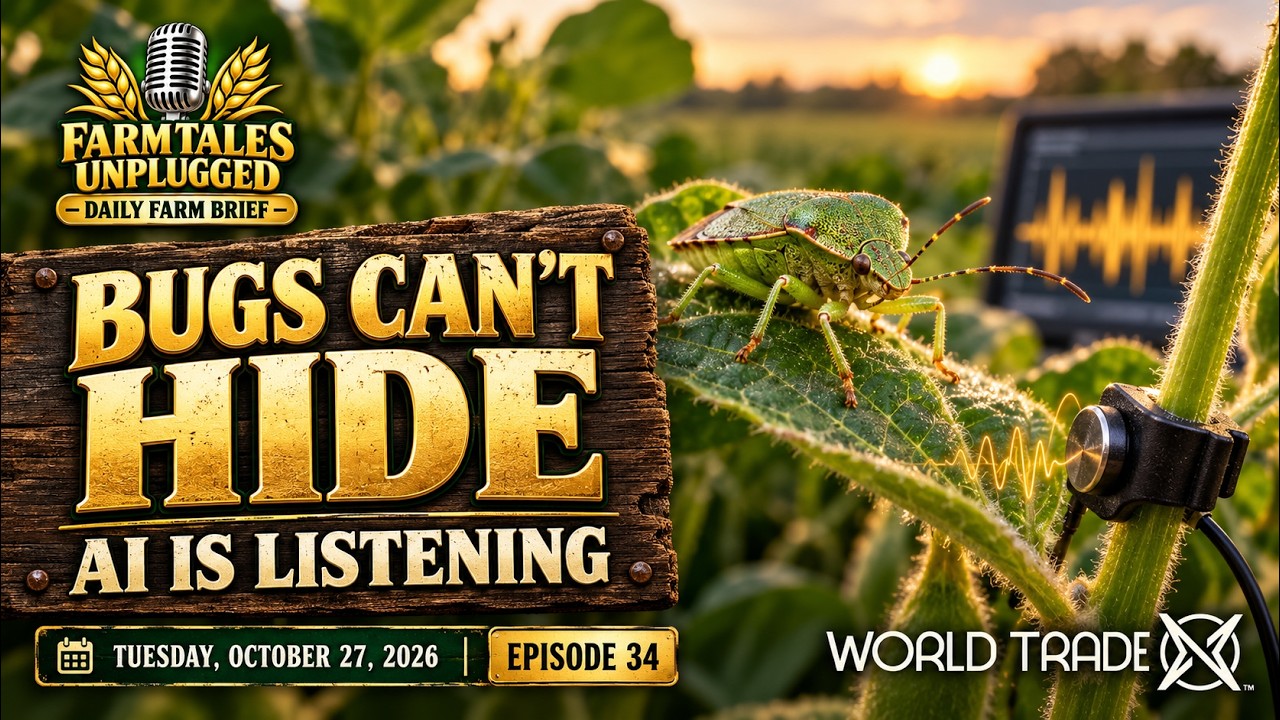
How Insect Eavesdropping Tech and AI Are Changing Soybean Pest Detection
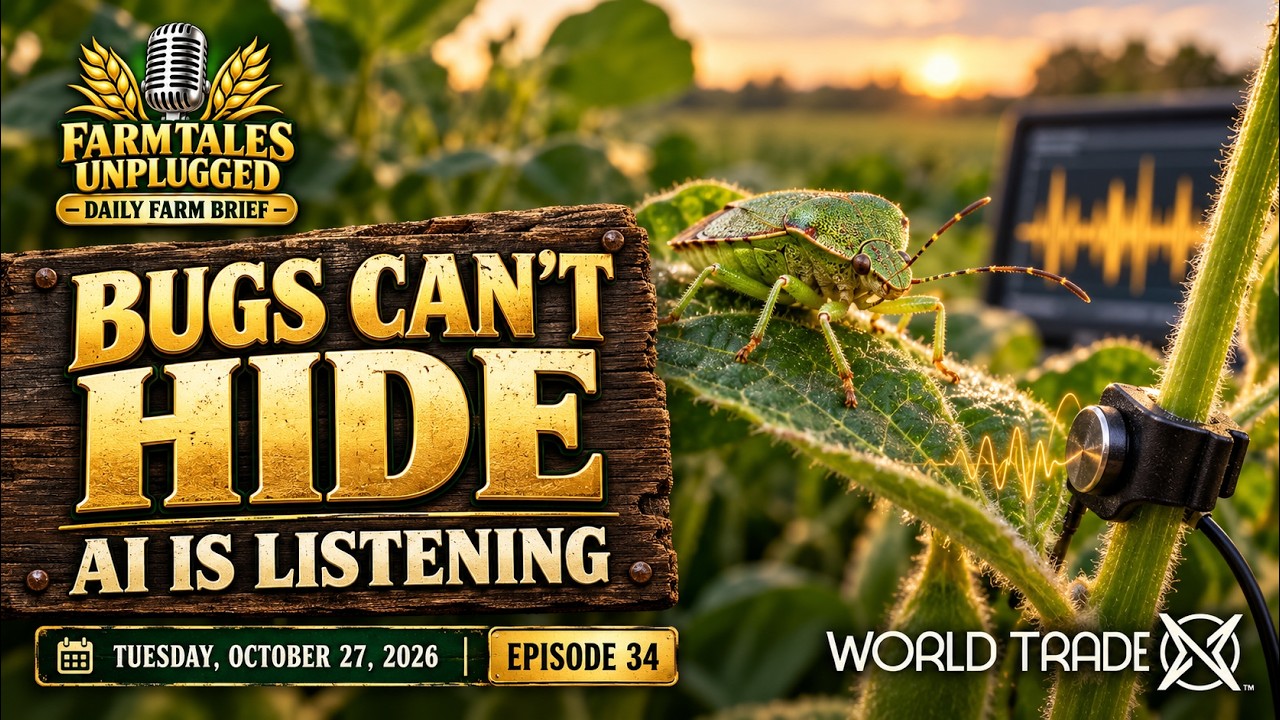
Discover how acoustic monitoring devices and artificial intelligence are transforming modern agriculture by allowing researchers to listen for hidden soybean pests before physical damage occurs. This deep dive explores how tiny stem-boring insects create detectable vibrations and how AI-driven pattern recognition is giving row crop farmers a powerful early warning system for better crop protection management.
Key Takeaways
- Acoustic sensors attach to soybean stems to capture faint feeding and movement vibrations from hidden pests.
- Artificial intelligence algorithms help automatically identify specific insect species based on unique vibrational frequency patterns.
- This technology eliminates the need for destructive physical plant sampling during early scouting phases.
- Early detection gives producers advanced notice to target pest management strategies before severe economic damage sets in.
- Current field testing by researchers at institutions like Kansas State and UW-Madison continues to refine real-world accuracy.
The Challenge of Hidden Soybean Pests
For generations, agricultural scouting has relied on visual inspections, sweep nets, and destructive sampling. While these traditional methods remain fundamental to farm management, they come with significant blind spots—literally. Many of the most destructive agricultural pests spend critical stages of their life cycles hidden deep inside plant tissues, stems, and root systems where the human eye cannot reach until it is too late.
In soybean production, stem-boring insects and internal chewers can establish colonies and cause substantial physiological stress to the plant long before any external symptoms manifest on the canopy. By the time leaves yellow, wilt, or break, the damage is often extensive, leaving producers scrambling with reactive measures rather than proactive controls. Traditional scouting methods require agronomists to physically split open stems across random field transects—a time-consuming process that destroys healthy plants and often misses localized hot spots entirely.
How Insect Eavesdropping Technology Works
Enter acoustic detection technology, frequently referred to in agricultural research as the "insect eavesdropping" system. Developed by researchers such as Emily Bick at the University of Wisconsin-Madison, this innovative approach turns passive listening into an active diagnostic tool. The setup utilizes miniature piezoelectric sensors or specialized acoustic pickups attached directly to the stems of growing crops.
These sensitive microphones capture the micro-vibrations generated when an insect chews on vascular tissue, moves through the stem pith, or scrapes against internal plant structures. These frequencies fall well outside the range of human hearing and are routinely masked by ambient environmental noise like wind blowing through the canopy. However, specialized digital filters and amplification protocols allow monitoring equipment to isolate these specific biological signatures.
The Role of Artificial Intelligence in Vibration Analysis
Capturing raw sound waves from a soybean stem is only the first step in the technological pipeline. The real breakthrough comes from pairing acoustic sensors with machine learning and artificial intelligence models. Different insect species possess unique feeding mechanics, mandibles, and movement speeds, meaning they leave behind distinct acoustic profiles or signatures.
Kansas State University research teams have been putting these systems through rigorous field testing against persistent stem-tunneling pests. By training AI algorithms on vast datasets of recorded insect activity, the software learns to differentiate between various pest species, benign environmental sounds, and natural plant growth movements. When deployed in commercial fields, the AI can analyze real-time audio streams, flag anomalous patterns, and alert farm managers to the exact location and likely identity of the hidden threat.
Implications for Future Farm Management and Precision Ag
The integration of acoustic pest detection into commercial crop production represents a major shift toward true precision agriculture. Rather than applying broad-spectrum insecticides on a calendar schedule or discovering an infestation only after yield loss has occurred, farmers could soon rely on targeted, threshold-based interventions guided by continuous acoustic monitoring.
While the technology is still undergoing rigorous field trials and optimization before widespread commercial availability, the potential benefits are immense. Early warnings mean growers can focus scouting efforts on specific rows or zones where activity is detected, saving time, reducing chemical input costs, and protecting overall profit margins. As machine learning models grow more sophisticated and sensor hardware becomes more cost-effective, listening to your crops may soon be as common as checking soil moisture levels.
Conclusion
As agricultural technology continues to evolve at a rapid pace, innovations like AI-powered acoustic pest monitoring are redefining what it means to scout a field. By catching destructive insects before visual symptoms appear, farmers gain a vital edge in protecting yield and optimizing input efficiency. To hear more daily agricultural updates, market insights, and rural stories, make sure to Listen to the full episode of Farm Tales Unplugged and stay ahead of the curve on all things ag tech and farm news.
Frequently Asked Questions
How do acoustic sensors detect hidden pests in soybeans?
Acoustic sensors attach directly to soybean stems and use miniature microphones to pick up faint, high-frequency vibrations caused by insects feeding and moving inside the plant tissue.
What role does artificial intelligence play in insect eavesdropping?
Artificial intelligence analyzes the recorded vibrational patterns and compares them against trained datasets to help identify which specific pest species is active inside the plant stem.
Do farmers still need to scout fields if using acoustic monitors?
Yes, acoustic monitoring acts as an early warning system designed to alert growers to hidden activity, allowing them to target their physical scouting efforts precisely where pests are detected.
Is this technology currently available for commercial farms?
The system is currently undergoing extensive field testing and research trials by university teams like those at Kansas State and the University of Wisconsin-Madison before commercial deployment.

Rick is a broadcaster at heart, having built an internet radio network back in 1993. Back then they were called archived shows (mp3), the term podcast didn't exist but some people were already podcasting and he was one of them. Internet radio fizzled out fast when the Sirius satellites were launched and all the big networks inhaled all the programming. Here we are 30 years later. My how things have changed. Independent media put regular people on the same playing field and news and entertainment changed forever. His passion is being a boat captain and spending every minute with his little girl dog Mandy by his side.
His news delivery style is described as "Hit the fact, explain why anyone would care, make a joke and move on". He tears though things he believes will be worth a listener knowing and hoping he can get them to smile or chuckle. Much of the news is not "Happy news" and he realizes how hard things are for farmers and truckers, so he tries to keep it light and comical because no matter how bad things get we always need to find a way to laugh about it or we'd all go crazy.
If you want a passionate ally to dole out the news while mixing it up with funny short stories and odd side news, you will find his favorite program "Daily Farm Brief" a worthy 10 minutes of you weekday.
Dual-Use Farming: How Solar Panels Over Idle Cranberry Bogs Restore Profitability