From Cover Crop to $300 Bottle: How Frey Ranch Turned Triticale Into High-End Whiskey
Discover how Nevada's Frey Ranch transformed triticale—a humble hybrid grain typically used for livestock feed and cover crops—into a luxury $300 craft whiskey release. Learn about the unique farming practices, estate distilling model, and what this means for alternative grains in the spirits market.
Key Takeaways
- Triticale is a purposeful cross between wheat and rye, historically planted as a hardy cover crop or livestock feed.
- Ashley and Colby Frey of Frey Ranch in Fallon, Nevada, integrated this unconventional grain into their latest $300 whiskey release, Third Harvest.
- Operating as a true estate distillery, the Frey family grows, harvests, distills, and bottles entirely on their historic Nevada homestead.
- Experimenting with livestock feed grains opens up innovative flavor profiles for craft distillers looking to differentiate their portfolios.
- While high-end pricing commands attention, the true profitability of aged spirits depends heavily on long-term aging cycles and operational scale.
The Evolution of Triticale: From Field Cover to Luxury Spirit
For generations, agronomists and livestock producers viewed triticale as a workhorse rather than a headline grain. Created by crossing wheat and rye, this synthetic cereal grain possesses the hardiness of rye and the yield characteristics of wheat. Farmers routinely drill it into the soil to suppress stubborn winter weeds, prevent wind and water erosion, and provide essential forage for livestock when traditional pastures run thin. It is practical, tough, and fundamentally utilitarian.
However, the craft spirits industry has increasingly begun to look past traditional corn, barley, and standard rye to find unique, complex flavors. When innovative farming families decide to push the boundaries of estate distillation, unexpected crops find a brand-new economic purpose. By taking a grain historically relegated to animal troughs and putting it through a rigorous fermentation, distillation, and aging process, distillers unlock flavor profiles that completely challenge consumer perceptions of what agricultural commodities can taste like.
Inside the Frey Ranch Estate Distilling Model
Located in Fallon, Nevada, with a farming legacy stretching back to 1854, Frey Ranch represents a masterclass in vertically integrated agriculture. Unlike many craft brands that purchase neutral grain spirits or sourced bourbons from massive industrial suppliers, the Frey family controls every single step of the supply chain. Colby Frey manages the agricultural and production side, ensuring that the soil health, irrigation, and grain selection are perfectly optimized. Meanwhile, Ashley Frey oversees the business branding, visitor experience, and market positioning.
This deep connection to the land allows the farm to experiment with experimental acreage. Instead of guessing how a grain will perform in a mash bill, Colby can test out unique lots of triticale right on the ranch. They can monitor how different weather patterns, planting dates, and soil types impact the starches and sugars within the grain. When they decided to craft their Third Harvest release, they weren't simply throwing random ingredients together; they were leveraging over a century and a half of localized agricultural knowledge to bring out the very best qualities of a non-traditional distilling grain.
Why Triticale Matters for Craft Distillers
Rye brings spice, wheat brings softness, and corn brings sweet backbone. Triticale acts as a fascinating bridge between its parent plants. It offers distillers the robust, spicy kick of rye combined with the smooth, approachable mouthfeel of wheat. For whiskey enthusiasts willing to pay top dollar for unique expressions, this hybrid grain provides an aromatic complexity that standard bourbons simply cannot replicate. It proves that innovation in agriculture does not always require inventing a brand-new genetically modified organism; sometimes, it simply requires looking at existing cover crops through a culinary and artisanal lens.
The Economics and Realities of a $300 Farm Bottle
A price tag of $300 per bottle naturally commands attention in the crowded spirits marketplace. When tasting room sales open for specialized releases like Third Harvest, consumers wonder whether the price reflects marketing hype or genuine agricultural craft. In reality, estate-distilled spirits carry massive holding costs. Whiskey does not happen overnight. Years of barrel aging, climate fluctuations resulting in barrel evaporation (the angel's share), and labor-intensive farming require immense capital investment long before a single dollar of profit returns to the farm.
Furthermore, pricing a bottle at this tier highlights the immense value shift possible when a farmer bypasses traditional commodity grain elevators. Selling triticale into the commercial feed market yields modest, commodity-driven returns tied directly to global livestock numbers. Transforming that same tonnage of grain into a premium, limited-release artisan spirit creates an entirely separate value-add ecosystem. It demonstrates how diversification can insulate multi-generational farms from the volatile swings of traditional commodity pricing.
Conclusion and Full Episode Link
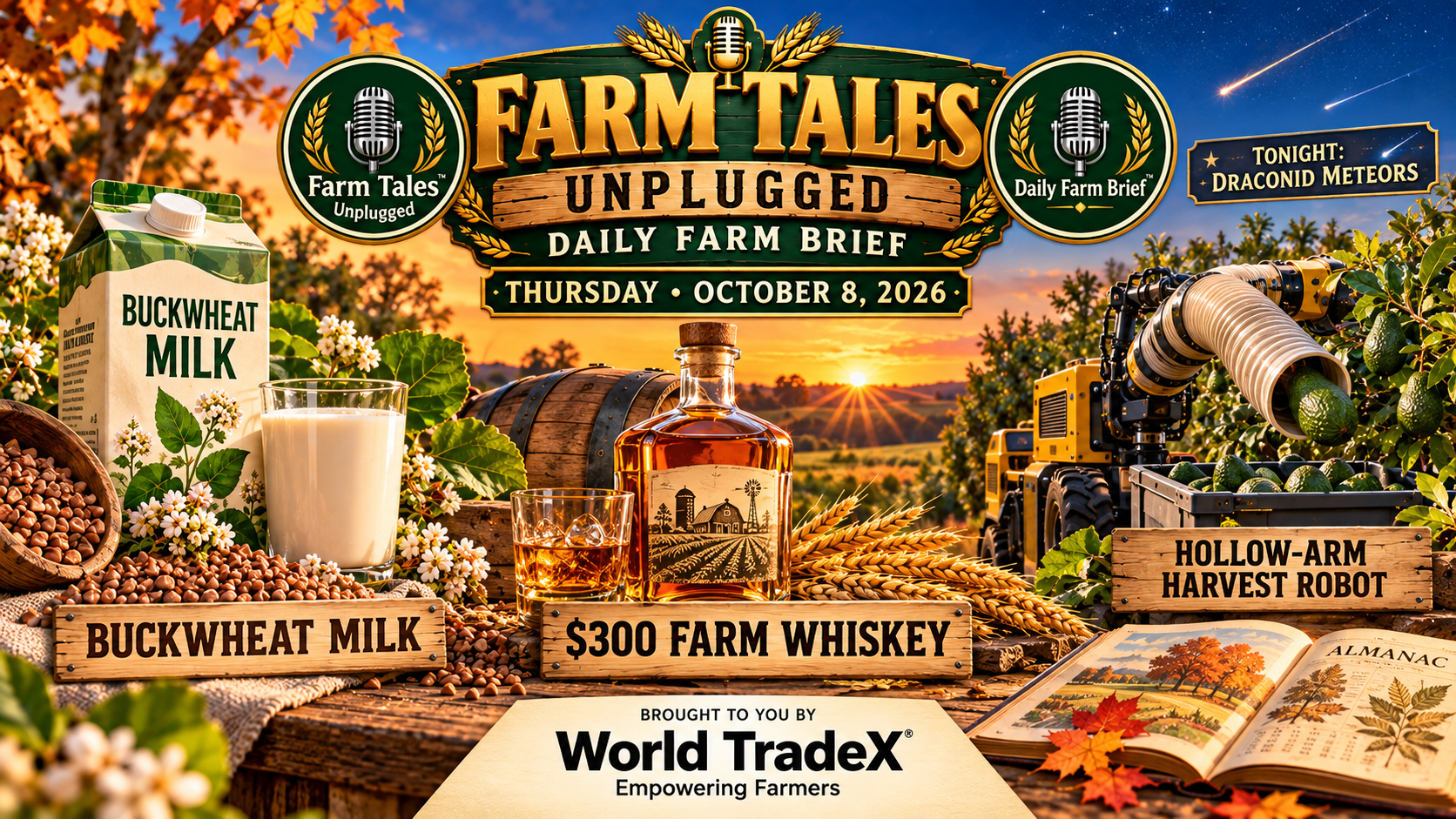
The journey of triticale from a humble Nevada cover crop to a luxury $300 whiskey bottle showcases the incredible ingenuity happening across modern agriculture. Whether farmers are turning weed-suppressing cover crops into premium spirits, exploring alternative milk markets, or testing cutting-edge harvesting robots, the intersection of farming and innovation has never been more exciting. To hear the complete discussion on agricultural trends, grain markets, and the latest tech breakthroughs, check out the weekly audio roundup. Listen to the full episode to stay updated on everything shaping the future of farming and rural communities.
Frequently Asked Questions
What is triticale and why is it used in whiskey?
Triticale is a man-made hybrid grain resulting from a cross between wheat and rye. It is traditionally used as a hardy cover crop or livestock feed, but distillers use it because it combines the spicy characteristics of rye with the smooth, soft mouthfeel of wheat.
Where is Frey Ranch located and what makes them unique?
Frey Ranch is located in Fallon, Nevada, with a farming heritage dating back to 1854. They operate as a true estate distillery, meaning they grow all their own grains on-site and handle all distilling, aging, and bottling directly on the family ranch.
How does turning cover crops into whiskey help farmers?
Selling crops into commercial feed or commodity grain markets exposes farmers to volatile price swings. Transforming those same crops into value-added artisanal products like craft whiskey allows producers to capture higher profit margins and diversify their farm revenue.
Why are limited-release farm whiskeys priced around $300?
High-end artisan spirits reflect the significant time, labor, and capital required for estate production. Because whiskey must age for years in barrels before it is ready to sell, producers face immense holding costs alongside the meticulous care required to grow specialty grains.

Rick is a broadcaster at heart, having built an internet radio network back in 1993. Back then they were called archived shows (mp3), the term podcast didn't exist but some people were already podcasting and he was one of them. Internet radio fizzled out fast when the Sirius satellites were launched and all the big networks inhaled all the programming. Here we are 30 years later. My how things have changed. Independent media put regular people on the same playing field and news and entertainment changed forever. His passion is being a boat captain and spending every minute with his little girl dog Mandy by his side.
His news delivery style is described as "Hit the fact, explain why anyone would care, make a joke and move on". He tears though things he believes will be worth a listener knowing and hoping he can get them to smile or chuckle. Much of the news is not "Happy news" and he realizes how hard things are for farmers and truckers, so he tries to keep it light and comical because no matter how bad things get we always need to find a way to laugh about it or we'd all go crazy.
If you want a passionate ally to dole out the news while mixing it up with funny short stories and odd side news, you will find his favorite program "Daily Farm Brief" a worthy 10 minutes of you weekday.
Dual-Use Farming: How Solar Panels Over Idle Cranberry Bogs Restore Profitability